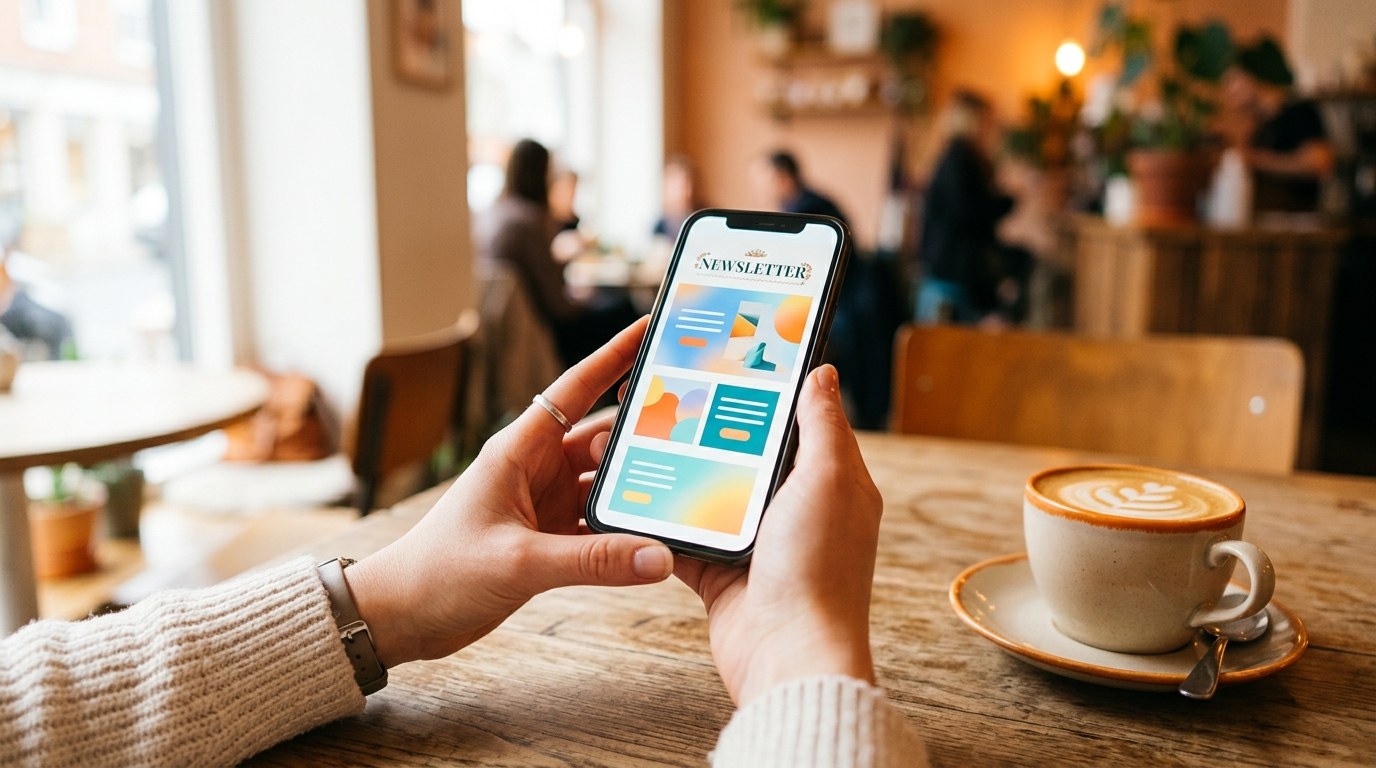
In a world of algorithms and ad costs, email marketing quietly remains the highest-return channel in marketing — and one of the most overlooked by small businesses. Here's a beginner-friendly guide to why it works and how to actually get started.
Why email marketing is so powerful
- You own your list. Unlike social media followers, your email list can't be throttled or taken away by an algorithm change. It's yours.
- It has the best ROI in marketing. Study after study puts email's return far ahead of other channels — it's cheap and it converts.
- It reaches people directly. Your message lands in their inbox, not lost in a feed.
- It brings customers back. Most people who visit your site or buy once won't return on their own — email is how you invite them back.
Step 1: Start collecting emails now
You can't email a list you don't have, so start building it today. The key is giving people a reason to sign up:
- Offer something — a discount on a first order, a helpful guide, or early access.
- Put a signup form on your website — a simple, visible one.
- Ask in person — at checkout, after a service, on a receipt.
- Never buy a list. It doesn't work, hurts your reputation, and can get you blocked.
Step 2: Pick a simple tool
You'll need an email marketing service to send to your list properly (sending mass email from your regular inbox gets you flagged as spam). There are beginner-friendly platforms with free tiers to start — pick one that's easy to use, since the best tool is the one you'll actually stick with.
Step 3: Decide what to send
You don't need to be a writer. The emails that work for small businesses are simple and genuinely useful:
- A welcome email when someone joins — introduce yourself and deliver whatever you promised.
- Occasional updates — new products, news, seasonal offers.
- Helpful tips related to what you do — this builds trust and keeps you top of mind.
- Special offers — exclusive deals for your subscribers.
Want help turning visitors into a customer list?
We build websites with lead capture and email signup built in — so your marketing actually grows a list you own. Let's talk.
Step 4: Keep it consistent (but not annoying)
Consistency beats frequency. A reliable monthly email is far better than a flurry followed by six months of silence. Show up regularly enough to stay remembered, but always with something worth opening — respect your subscribers' inboxes and they'll keep letting you in.
A few simple best practices
- Write a subject line worth opening — clear and specific beats clever.
- Keep it short and focused on one main thing per email.
- Include one clear call-to-action — what do you want them to do?
- Make sure it looks good on a phone, where most email is read.
- Always include an unsubscribe link — it's required, and it keeps your list healthy.
The bottom line
Email marketing isn't flashy, but it's dependable, cheap, and effective — a channel you own that brings customers back again and again. Start collecting addresses now, even if you're not ready to send yet. The best time to start building your list was when you opened; the second-best time is today.
The short version
- Email is the highest-ROI channel — and you own the list, unlike social.
- Start collecting addresses now, with a real reason to sign up.
- Use a simple email tool; never buy a list.
- Send useful, consistent emails with one clear call-to-action.
- Respect the inbox — quality and consistency beat frequency.